
OMG! Chiyedza joined Readers TV
There are many variations of passages of Lorem Ipsum available, but the majority have suffered alteration in some form, by injected humour.
1. Turn Knowledge Into Content
Graduates can transform what they studied into practical, engaging podcast episodes. A psychology graduate might share mental health insights, while an engineering graduate could break down tech trends for non-experts. This way, their degree becomes a living resource rather than just a certificate.
2. Build a Personal Brand
By hosting a podcast, graduates showcase their expertise, curiosity, and personality. Over time, this helps them stand out in a crowded job market, attract followers, and even open doors to speaking gigs, consulting, or media features.
3. Monetize With Sponsors and Partnerships
Podcasting isn’t just about sharing ideas—it can pay. Once a graduate grows a loyal audience, they can approach brands for sponsorships, collaborate with companies for product mentions, or join affiliate programs. Even niche podcasts can secure sponsors if the listeners are highly engaged.
4. Offer Podcast Services
Learning the behind-the-scenes skills—editing, sound design, publishing, and promotion—creates opportunities to work as a podcast producer or editor. Many businesses, authors, and entrepreneurs want a podcast but don’t have the skills or time to run one.
5. Create Educational Products
Graduates can expand their podcast into online courses, workshops, or coaching programs. Their podcast acts as free marketing, attracting learners who are willing to pay for deeper, structured teaching.
6. Step Into Journalism and Storytelling
Podcasting is now a recognized media path. Graduates with interests in storytelling, writing, or research can build careers in investigative podcasts, documentary-style shows, or entertainment productions.
7. Use It as a Networking Tool
A podcast makes it easier to reach industry leaders, professors, or professionals by inviting them on as guests. This builds a graduate’s network in a natural, collaborative way—often leading to internships, collaborations, or job opportunities.
8. Showcase Skills to Employers
Instead of only sending out CVs, graduates can show initiative and communication skills through their podcast. Employers see a living portfolio of research, consistency, and thought leadership—all highly valuable traits.
9. Grow Communities and Events
Podcasts naturally build audiences. Graduates can transform listeners into active communities through live shows, meet-ups, or online groups. This creates opportunities for event tickets, memberships, and merchandise.
10. Build Long-Term Media Ownership
What starts as a single show can evolve into a podcast network or media company. Graduates who treat podcasting like a business—finding sponsors, hiring a team, and developing multiple shows—can create sustainable careers that extend well beyond their original degree.
🎙️ New to streaming or looking to level up? Check out StreamYard and get $10 discount! 😍 https://streamyard.com/pal/d/4587272878292992
There are many variations of passages of Lorem Ipsum available, but the majority have suffered alteration in some form, by injected humour.
Lead with confidence during midlife, especially during perimenopause and menopause!
7 views Streamed live 3 hours ago #LightUpYourLiveEvent
The ability to stream our Live events to multiple hannels is one of the biggest benefits of Livestreaming for event hosts and organisers. It is important to stream events to platforms that will give us good engagement with our ideal audience (s).
Which platforms do you stream your live events to?
What criteria do you use to choose the right platforms for your live streams?
How important is having an active presence on the platforms you stream to, in order to get engagement from audiences?
There are so many opinions and beliefs about money in our lives: Money is evil but we need money to live; Never chase the Benjamins, yet we must sell and make money; Money is not important eventhough we all work for money. What does mony eally mean to us?
* How important is money to you?
* How much money do you want/need?
* Do you believe acummulating wealth changes people negatively or positively?
Join Money Matters Live Pop Up Room to share and learn about money matters. Let’s explore our relationship with money and how to develop healthy concepts around making and using money. Bring your experiences, strategies, challenges and questions about money.
💥 How Most People Deal With Being Let Down
When people are let down, they rarely respond with balance. Most either withdraw or retaliate. Their reactions are emotional reflexes rather than conscious choices.
They turn cold and assume everyone will let them down.
They numb themselves with distractions, alcohol, or empty attention.
They dream about revenge and convince themselves it will heal them.
They isolate so much that safety turns into loneliness.
They replay the same story so often that the pain becomes their identity.
They push away good people because trust feels dangerous now.
They chase success to prove a point instead of finding peace.
They start doubting everything, even kindness.
That’s how most people deal with being let down — through protection, not healing. The disappointment becomes a lens through which they view the world. Every future connection is filtered through the fear of being hurt again.
But healing doesn’t happen through avoidance. It happens through awareness and adjustment.
💡 How To Manage Being Let Down
Those who rise after being let down don’t have fewer wounds. They simply learn to handle them differently. Their focus shifts from control to understanding.
They face the pain instead of running from it. Avoidance only stretches the suffering. When you let yourself feel the disappointment fully, it loses its ability to control you.
They stop expecting everyone to think or care like they do. They realise that most people act from self-interest rather than shared values. That insight brings emotional freedom.
They use the pain as energy. They channel frustration into discipline, creativity, and focus. Pain becomes a catalyst instead of a cage.
They watch actions, not words. After you’ve been deceived by promises, you start recognising truth in patterns, not speeches.
They build emotional independence. They learn that peace is self-sourced. When your stability comes from within, nobody can take it away.
They become quieter. Not bitter, just observant. They talk less, listen more, and value inner calm over outer noise.
They walk away clean. Closure is not confrontation; it is clarity. When you stop demanding apologies and start accepting reality, you reclaim your energy.
They accept reality. They stop repainting people who have already revealed their true colours. Acceptance doesn’t mean approval — it means you finally stop negotiating with the truth.
💭 Expectations — The Silent Setup
Unspoken expectations are premeditated resentments. You imagine how someone should act, often based on how you would act, and then punish them for failing to follow your internal script. It’s emotional projection disguised as moral fairness.
Expectation management is not cynicism; it’s realism. When you understand human behaviour, you stop demanding emotional perfection from others. You realise that disappointment often comes not from betrayal, but from assumption.
If you don’t expect, you won’t be let down. This doesn’t mean apathy; it means detachment from fantasy. You stop giving people the power to decide your mood. You take back control of your emotional thermostat.
And remember — your behaviour doesn’t always align with other people’s expectations either. You’ve let people down too, even unintentionally. That awareness breeds compassion and humility.
Peace begins when you stop expecting and start observing. You stop taking things personally. You stop confusing effort with entitlement. You learn to value patterns over promises.
🔮 The Honest Truth
Most people do not heal. They just learn to hide it better.
Time does not heal anything. Seeing the truth does.
Being let down again and again is not bad luck. It is ignoring patterns.
Forgiveness is not weakness. It means you stop letting the same memory live rent free in your mind.
The world runs on self-interest. When you understand that, you stop taking things personally.
Pain is a teacher. It shows you what you refused to learn when life whispered gently.
Who is this event for?
Entrepreneurs and aspiring busines leaders will benefit from joining our conversation because you will learn strategies to achieve your goals.
We’d also like to learn insights and strategies from business leaders who have built successful businesses.
—
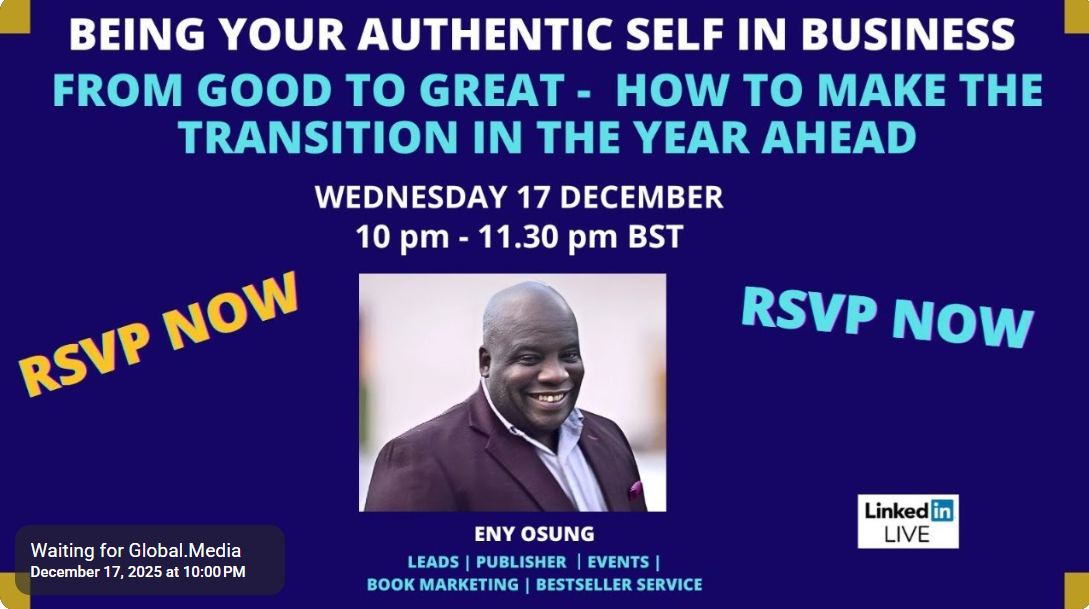
We all hear plenty of talk about aiming for greatness at this time of the year. While renewed effort and strategies around New Year can propel us to build profitable businesses, not everyone knows what it means to achieve greatness in business.
* What is your experience of striving to achieve greatness in business?
* Which criteria qualify as markers for being great in entrepreneurship?
* How does a growth mindset contribute to business owners aiming to make great impact?
Join #BeingYourAuthenticSelfInBusiness Live to share and learn about how we define greatness in business. Let’s explore what it means to do great things and strategies for entrepreneurs to achieve greatness.
Bring your experiences, strategies, challeneges and questions about setting your goals for 2026 and beyond.
There are many variations of passages of Lorem Ipsum available, but the majority have suffered alteration in some form, by injected humour.